Check out our AI Agent.Learn more


Facebook Ads vs Google Ads: Which Is Better?
Facebook (Meta) Ads create demand by putting your product in front of people who didn't know they wanted it. Google Ads capture demand from people actively searching. Most brands need both — but the balance depends on your product, audience, and goals.
Facebook (Meta) Ads vs Google Ads at a glance
| Characteristic | Facebook (Meta) Ads | Google Ads |
|---|---|---|
| Primary model | Demand creation — interrupt-based | Demand capture — intent-based |
| Targeting approach | Audience-based (interests, behaviors, lookalikes) | Keyword-based (search intent) + audience |
| Ad formats | Image, video, carousel, Stories, Reels | Text ads, Shopping, Display, YouTube video |
| Average CPC | $0.50–$2.00 (varies by industry) | $1.00–$4.00 (varies by keyword competition) |
| Average CPM | $5–$15 (ecommerce typical) | $3–$10 (Display), $20–$50+ (Search) |
| Creative importance | Critical — creative is the targeting | Moderate — keywords matter more in Search |
| Best for | Ecommerce, DTC, visual products, brand awareness | Lead gen, high-intent purchases, B2B, local services |
| Platforms included | Facebook, Instagram, Messenger, Audience Network | Google Search, Shopping, YouTube, Display Network |
Primary model
Demand creation — interrupt-based
Demand capture — intent-based
Targeting approach
Audience-based (interests, behaviors, lookalikes)
Keyword-based (search intent) + audience
Ad formats
Image, video, carousel, Stories, Reels
Text ads, Shopping, Display, YouTube video
Average CPC
$0.50–$2.00 (varies by industry)
$1.00–$4.00 (varies by keyword competition)
Average CPM
$5–$15 (ecommerce typical)
$3–$10 (Display), $20–$50+ (Search)
Creative importance
Critical — creative is the targeting
Moderate — keywords matter more in Search
Best for
Ecommerce, DTC, visual products, brand awareness
Lead gen, high-intent purchases, B2B, local services
Platforms included
Facebook, Instagram, Messenger, Audience Network
Google Search, Shopping, YouTube, Display Network
Key differences explained
Demand creation vs demand capture
This is the fundamental difference. Facebook Ads show your product to people who might be interested based on their behavior and profile — even if they've never searched for it. You're creating demand. Google Search Ads appear when someone actively types a query like 'best running shoes' — they already want something. You're capturing existing demand.
This matters for strategy: if nobody is searching for your product (new category, novel product), Facebook is your primary channel. If there's high search volume for what you sell, Google captures that intent at the moment of highest purchase readiness.
Creative is the targeting on Facebook
On Facebook, your ad creative is effectively your targeting mechanism. As Meta's algorithm has moved toward broad targeting and Advantage+, the creative itself determines who sees and engages with your ads. A video showing a kitchen gadget in action will naturally reach people interested in cooking — the algorithm learns from engagement signals.
On Google Search, creative matters less because the keyword does the targeting work. Your ad copy needs to be compelling, but the match between search query and ad determines relevance. Google Shopping relies more on product images and pricing than creative storytelling.
Cost dynamics
Facebook Ads are generally cheaper on a CPM basis ($5-$15 for ecommerce), but you're paying to reach people who may not be ready to buy. Conversion rates are lower because you're interrupting, not answering a question.
Google Search is more expensive per click ($1-$4+), but click-through often signals high intent. Conversion rates for Search campaigns are typically higher because the user is already in buying mode. The cost-per-acquisition math can favor either platform depending on your product and margins.
Measurement and attribution
Google Ads benefits from clearer attribution — someone searches, clicks, buys. The path is direct and trackable. Facebook Ads attribution has been more challenging since iOS 14.5, which limited pixel tracking. View-through conversions, multi-touch attribution, and platform discrepancies make Facebook ROAS harder to measure accurately.
This is why creative analytics matters more for Facebook — when attribution is fuzzy, understanding which creative elements drive engagement becomes the primary optimization lever.
When to prioritize Facebook Ads
Facebook (Meta) Ads are the stronger choice when your product is visual, your audience is broad, and you need to generate demand rather than capture it.
- Ecommerce and DTC brands with visually appealing products
- New product launches where no search demand exists yet
- Broad audience targeting with Advantage+ campaigns
- Video-first creative strategies (Reels, Stories, in-feed video)
- Retargeting warm audiences from website visitors and email lists
- Scaling beyond search volume limits — Facebook's audience is larger than Google's search volume for most niches
When to prioritize Google Ads
Google Ads are the stronger choice when there's existing search demand and you want to capture high-intent buyers at the moment of decision.
- High-intent products with strong search volume (e.g., 'buy protein powder online')
- B2B and lead generation where buyers research before purchasing
- Local services and businesses targeting geographic queries
- Google Shopping for product-based ecommerce with competitive pricing
- Branded search campaigns to protect your brand terms from competitors
- YouTube pre-roll for video advertising with intent signals from Google data
How Rule1 helps optimize your Facebook Ads creative
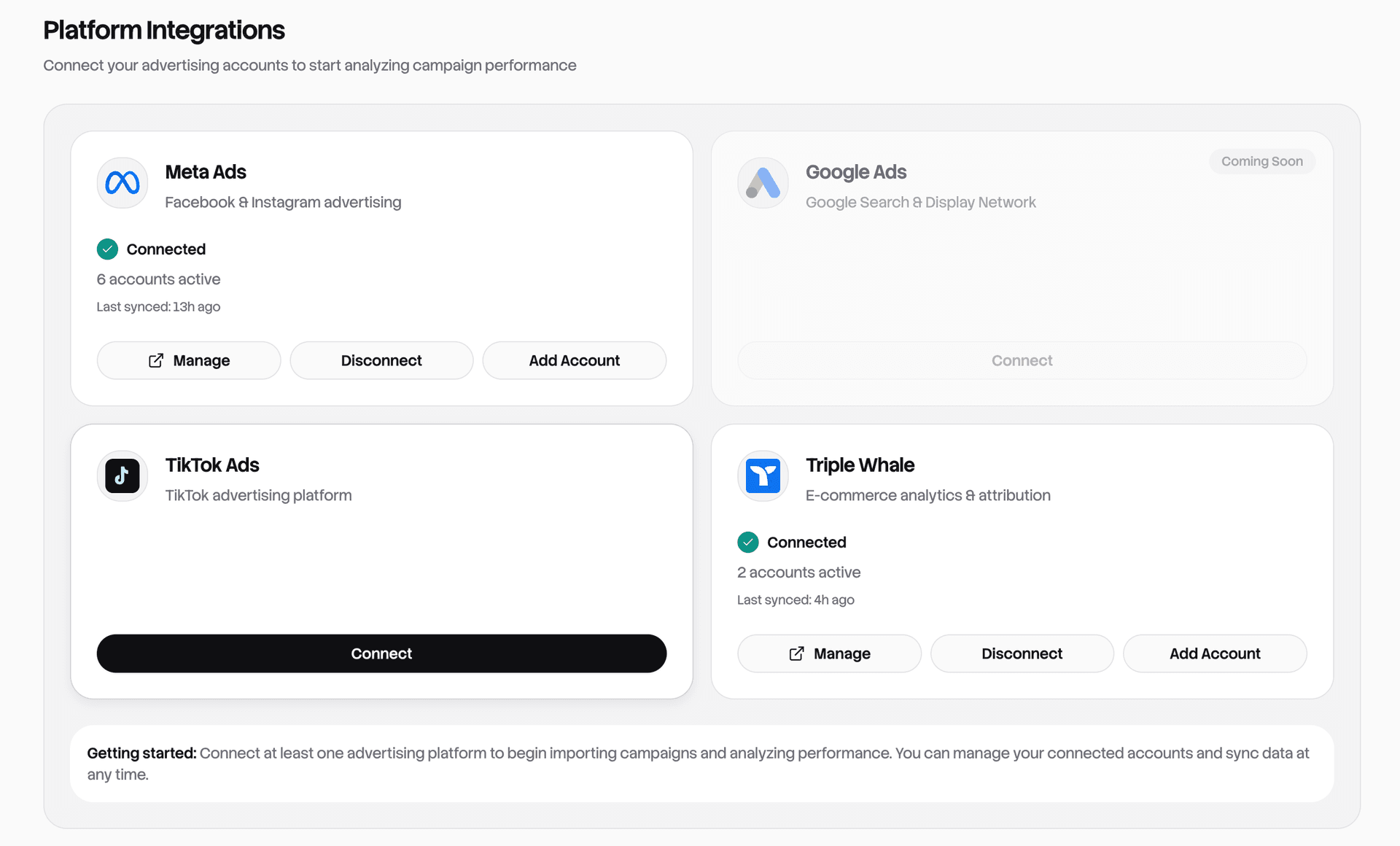
On Facebook, creative is everything. Rule1 analyzes your Meta ad creatives across 20 dimensions — hooks, messaging angles, CTAs, visual formats, pacing — to identify exactly what drives performance. AI Creative Reports tell you which creative elements are winning and why.
Track ROAS by creative element, not just by campaign. When you know that 'problem-agitation' hooks outperform 'feature-benefit' hooks by 2x for your brand, you can brief your creative team with data instead of guesswork.
Frequently asked questions
Related pages
Performance Marketing vs Brand Marketing
CompareSide-by-side comparison with clear examples and data.
Learn moreROAS vs ROI: What's the Difference?
CompareSide-by-side comparison with clear examples and data.
Learn moreROAS Calculator
ToolCalculate your return on ad spend instantly with our free tool.
Learn moreRule1 Alternatives
AlternativeSee how Rule1 compares to Motion, Triple Whale, and Madgicx.
Learn moreHow Rule1 helps optimize your Facebook Ads creative
On Facebook, creative is everything. Rule1 analyzes your Meta ad creatives across 20 dimensions — hooks, messaging angles, CTAs, visual formats, pacing — to identify exactly what drives performance. AI Creative Reports tell you which creative elements are winning and why.